
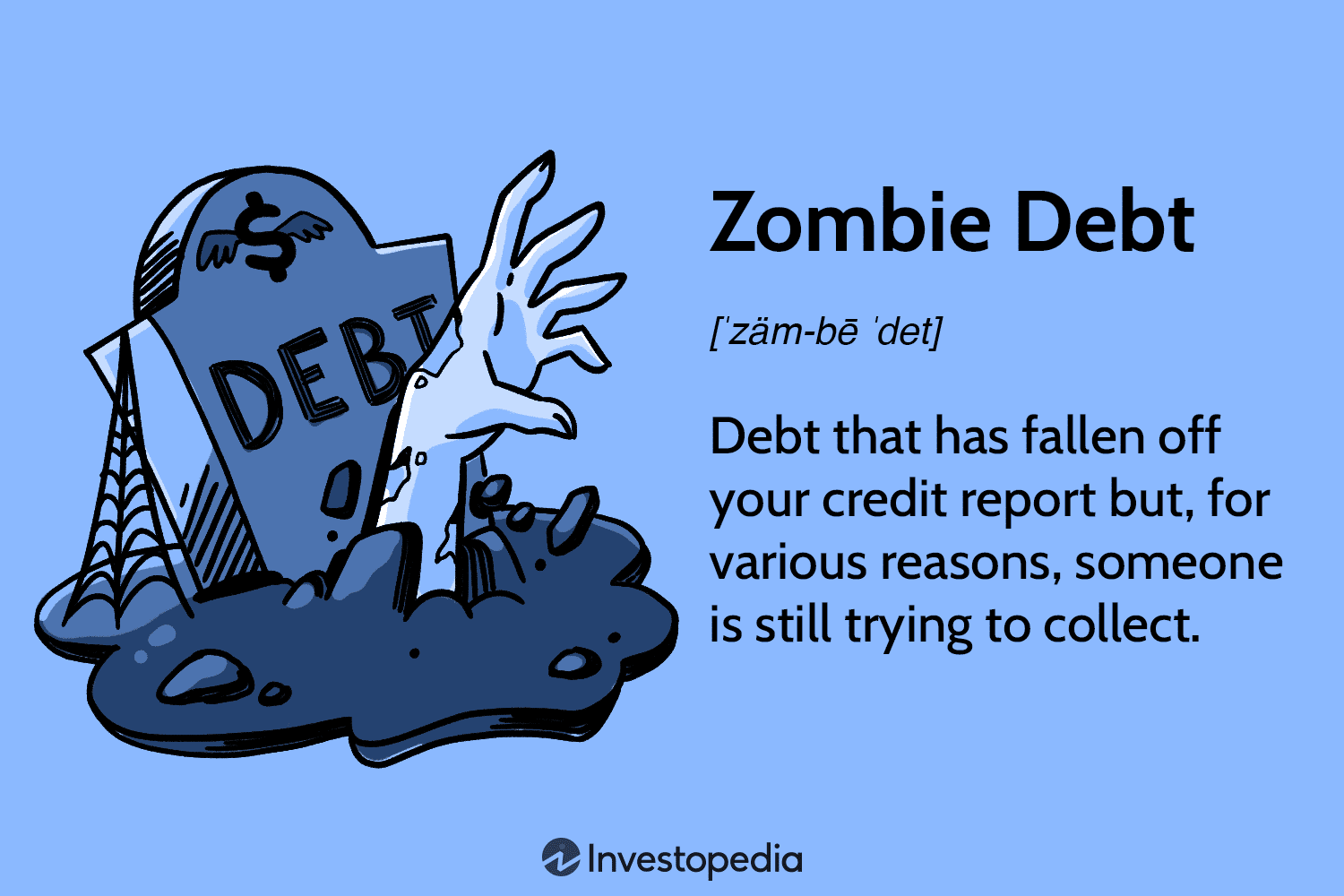
The letter arrives from a company you have never heard of, demanding payment on a debt you barely remember. Maybe you thought the debt was settled years ago. Maybe you assumed it fell off your credit report. Maybe you simply forgot about it entirely. Whatever the case, this debt has risen from the grave, and it is coming for you.
Welcome to the world of zombie debt, where old, expired, or even fully paid obligations are resurrected by debt buyers who profit from confusion and fear. Understanding how these zombies rise and knowing how to fight them can save you from paying debts you do not legally owe.
What Exactly Is Zombie Debt?
Zombie debt is old debt that is no longer legally enforceable but is pursued by collectors anyway. The term captures the haunting reality: debts that should be dead and buried somehow come back to life.
These are typically credit card accounts, medical bills, or personal loans that are past the statute of limitations, meaning the time period during which a creditor can sue you to collect has expired. Some zombie debts were even discharged in bankruptcy, already paid off, or never belonged to the victim in the first place.
Debt buyers purchase these old accounts for pennies on the dollar, often paying just three to ten cents for every hundred dollars of face value. They buy in bulk, acquiring portfolios containing thousands of debts with minimal documentation. Then they begin collection efforts, hoping that enough people will pay to make the venture profitable.
Why Zombie Debt Collectors Target You
The business model relies on volume and intimidation. Collectors send letters designed to look like official court documents. They make phone calls threatening lawsuits or wage garnishment. They may even file actual lawsuits, betting that you will not show up to defend yourself.
When you do not respond, they win default judgments, and suddenly that uncollectible zombie debt becomes a legally enforceable judgment that can be used to garnish wages and freeze bank accounts.
The most vulnerable consumers are often targeted. Low-income individuals, the elderly, and those with disabilities are disproportionately pursued because they may lack resources to fight back or may be more easily intimidated.
How Zombie Debt Rises from the Grave
The resurrection happens through several mechanisms, some legal and some deeply unethical.
The statute of limitations defense disappears. In many states, if you make even a small payment on an old debt or acknowledge in writing that you owe it, the statute of limitations clock can restart. A clever collector might call and say, “If you just pay $20 to show good faith, we can work something out.” That $20 payment can revive the entire debt, making you legally vulnerable again.
Default judgments resurrect everything. If a collector sues you on a time-barred debt and you fail to respond, the court enters a default judgment. The zombie debt is now a live judgment that can be enforced for years, often a decade or more, and may be renewable.
Incomplete documentation hides the truth. Original creditors often sell debt portfolios without providing supporting documents like signed contracts or detailed account histories. Collectors may sue based on bare-bones affidavits, and if you do not challenge them, the court accepts the claim.
Some debts never die on credit reports. While negative items must be removed after seven years, the underlying debt may still exist. A collector can pursue it even after it vanishes from your credit history, leaving you unaware until the lawsuit arrives.
The Statute of Limitations: Your Zombie Repellent
The most powerful weapon against zombie debt is the statute of limitations. Every state sets a time limit for filing lawsuits to collect debts. For credit cards and other open-ended accounts, these periods typically range from three to six years, though some states allow up to ten years.
Once the statute expires, the debt becomes “time-barred.” Collectors can still ask you to pay voluntarily, but they cannot sue you or threaten legal action. If they sue anyway, raising the statute of limitations as a defense should get the case dismissed.
Texas provides a strong example. The statute of limitations for debt there is four years, and a 2019 state law clarified that making a payment or acknowledging the debt does not restart the clock. This prevents the very zombie revival tactics used elsewhere.
How to Fight Back Against Zombie Debt
If you are contacted about old debt or sued by a collector, take these steps immediately.
Do not ignore it. If you are served with a lawsuit, responding is essential. Ignoring the summons guarantees a default judgment against you. Even if you cannot afford an attorney, show up in court on the scheduled date and ask the judge for time to prepare.
Request debt validation. Under the Fair Debt Collection Practices Act, you have the right to demand proof that the debt is yours and that the collector has the right to collect. Send a written validation letter by certified mail within thirty days of first contact. Request the original contract with your signature, a complete accounting, and proof of the chain of ownership.
Verify the statute of limitations. Determine when you made your last payment and check your state’s statute of limitations. If the debt is time-barred, this is your strongest defense. The collector must prove the debt is within the limitations period; you do not have to prove it is expired.
Document everything. Keep records of all communications, including letters, phone call logs, and voicemails. If collectors threaten legal action on time-barred debt, that behavior violates the FDCPA and can give you grounds to sue.
Get legal help. Many consumer attorneys offer free consultations and take cases on contingency, meaning you pay nothing unless you win. Legal aid organizations provide free assistance to those who qualify. In one recent victory, Legal Services NYC helped a client defeat a zombie debt lawsuit, securing a ruling that potentially benefits thousands of borrowers.
The Zombie Mortgage Threat
While credit card zombie debt is common, zombie mortgages pose an even greater danger because they threaten your home. These are often second mortgages from the 2008 financial crisis era that homeowners thought were gone but have resurfaced decades later.
Debt collectors purchase these old second mortgages for pennies and then pursue foreclosure, demanding years of back interest and fees. Homeowners who kept their first mortgages current and built equity become prime targets because they have something to lose.
The Consumer Financial Protection Bureau issued guidance in 2023 reminding collectors that suing on time-barred mortgage debt or threatening foreclosure violates federal law. However, enforcement has weakened, leaving many homeowners to fight alone.
Recent cases show that borrowers who fight back often win. A nationwide review found that the vast majority of homeowners who sued over zombie mortgages kept their homes after producing evidence of FDCPA violations.
The Bottom Line
Zombie debt preys on confusion and fear. Collectors count on you not knowing your rights, not understanding statutes of limitations, and not showing up in court. When you do fight back, the undead often crumble.
Remember these key protections. You have the right to demand proof of the debt. The statute of limitations is a complete defense. Making a payment can revive old debt. And if you are sued, responding is essential.
Do not let zombie debt haunt you. Know your rights, assert them forcefully, and make the collectors prove their case. Often, they cannot.




Leave a Reply