
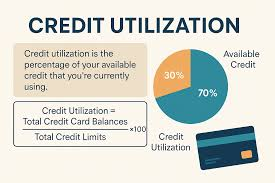
If you have read any personal finance advice in the last decade, you have heard the “30% rule.” It states that as long as you keep your credit card balances below thirty percent of your credit limits, your credit score is safe. This guidance appears on countless websites, bank blogs, and even credit counseling materials. But here is the truth that most sources won’t tell you: the 30% rule is not wrong, but it is dangerously incomplete.
Treating thirty percent as your target is like aiming for a C-minus in a class where you need an A to qualify for the best opportunities. In 2026, with new scoring models gaining traction and lenders using more sophisticated risk assessments, understanding modern credit utilization strategies can mean the difference between a good score and an exceptional one.
The 30% Rule Was Never the Whole Story
The 30% threshold originated as a guideline for risk assessment, not as an optimization target. When lenders see borrowers using more than one-third of their available credit, they grow concerned about potential financial distress. Crossing that line will almost certainly trigger a score drop.
However, FICO data reveals a linear relationship between utilization and score impact even below thirty percent. A borrower using twenty-five percent of their available credit is viewed as higher risk than someone using just five percent. If you are sitting at twenty-nine percent feeling perfectly safe, you are leaving points on the table.
The consumers with the very highest credit scores, those above eight hundred, typically maintain utilization in the single digits. Experian data consistently shows that top-tier borrowers average utilization around seven percent or lower. This gap between “safe” and “optimal” is where the 30% rule fails consumers who want to maximize their financial potential.
The Real Sweet Spot of Credit utilization for 2026
For 2026, the evidence points clearly toward a new target range. Keeping your overall credit utilization between one percent and nine percent delivers the maximum scoring benefit. This range signals to lenders that you use credit responsibly without depending on it excessively.
If you are preparing for a major application like a mortgage or a premium travel card, aiming even lower makes sense. Getting reported balances down to between one percent and three percent positions you optimally for lenders using any scoring model.
This precision matters more now than it did a decade ago because newer scoring models like FICO 10 and VantageScore 4.0 are gaining adoption. These models look beyond a single snapshot at your credit patterns over the past twenty-four months, using what is called trended data. Consistent low utilization over time signals stability better than occasional month-end payoff sprees.
The Zero Percent Trap
Here is where even knowledgeable consumers make mistakes. Since lower utilization clearly helps your score, it seems logical that zero percent would be perfect. But credit scoring models do not work that way.
If every single one of your credit cards reports a zero balance on your statement closing date, you may actually see a score drop of fifteen to twenty points compared to reporting a small balance. Why? Because scoring algorithms interpret total inactivity as a lack of recent data on how you manage repayment. They prefer seeing active, responsible usage over no usage at all.
The solution is the AZEO method, which stands for All Zero Except One. This advanced strategy involves paying off every credit card except one before your statement closing dates, then letting that single card report a tiny balance like ten or twenty dollars. After the statement generates, you pay that small balance immediately to avoid interest charges. This approach gives scoring models exactly what they want: proof of active credit use combined with minimal balances.
Mastering the Statement Closing Date Hack
One of the most powerful credit utilization strategies for 2026 involves understanding the difference between your statement closing date and your payment due date. Most consumers confuse these two dates, and that confusion costs them points.
Credit card issuers typically report your balance to the credit bureaus on your statement closing date, which usually falls twenty to twenty-five days before your payment due date. If you spend heavily during the month and wait until the due date to pay, your statement has already closed with a high balance, and that high balance has already been reported to the bureaus.
The fix is simple once you know it. Log into your account a few days before your statement closing date and pay your current balance down to your target level, ideally between one and nine percent of your limit. When the statement closes, it reports that low balance, and your score reflects the improvement within days.
This strategy works because credit utilization is what experts call “memoryless” in most scoring models. If you have ninety percent utilization one month but pay it down before the next statement closes, your score rebounds immediately once the new lower balance is reported. The exception is newer models like FICO 10T, which track trends over time, making consistent low utilization even more important.

Increasing Limits to Lower Credit Utilization
There are two ways to improve your utilization ratio. You can reduce the amount you owe, which is the financially healthier approach. Or you can increase your total available credit, which requires no additional cash outlay.
Requesting credit limit increases from your existing card issuers can instantly lower your utilization ratio. If you have a five-thousand-dollar balance on a ten-thousand-dollar limit, your utilization is fifty percent. If the issuer increases your limit to fifteen thousand dollars, that same five-thousand-dollar balance now represents just thirty-three percent utilization.
Before making this request, ask whether the issuer will perform a hard inquiry on your credit report. Many issuers can grant increases based on your existing relationship using a soft inquiry, which does not affect your score. Even if a hard inquiry dings your score temporarily, the long-term benefit of lower utilization often outweighs this minor and temporary drop.
Opening a new credit card can also lower your overall utilization by adding to your total available credit. This strategy comes with the temporary cost of a hard inquiry and a slight dip in your average account age, but for many borrowers, the utilization improvement outweighs these factors.
Why This Matters More with New Scoring Models
The shift toward trended data in FICO 10 and VantageScore 4.0 makes consistent low utilization more important than ever. These models, now used by mortgage lenders and increasingly by other creditors, look at your credit behavior over the past twenty-four months rather than taking a single snapshot.
This means that temporarily lowering your utilization right before applying for a loan, a practice known as “credit cleansing,” becomes less effective. Lenders using trended models can see whether you typically carry high balances and only pay them down when you need to borrow. The borrower who maintains low utilization month after month looks safer than the one who cycles between high balances and last-minute payoffs.
For mortgage applicants specifically, this matters greatly. Fannie Mae and Freddie Mac now allow lenders to use VantageScore 4.0 alongside traditional FICO scores, and this model explicitly considers trended data. Preparing for a home purchase means establishing healthy utilization patterns six to twelve months in advance, not just the month before you apply.
Practical Steps for 2026
Implementing modern credit utilization strategies does not require complex financial engineering. Start by checking your current utilization across all credit cards. If you are above thirty percent on any card, that card should become your priority for payment.
If your overall utilization sits between ten and thirty percent, you are in decent shape but leaving room for improvement. Aim to bring it down toward the single digits over the next few months. Paying down high-interest debt first makes the most financial sense, but any reduction in reported balances helps your score.
For those targeting top-tier scores, implement the AZEO method in the months before a major credit application. Identify one card to report a small balance and pay all others to zero before their statement closing dates. This approach typically yields the maximum score benefit.
Finally, consider using tools like Experian Boost to add positive payment history from rent, utilities, and streaming services to your credit file. While these do not directly affect utilization, they strengthen your overall credit profile and can help offset any minor fluctuations.
The Bottom Line
The 30% rule is not dead, but it has evolved from a safety guideline into a starting point. Staying below thirty percent protects you from major score damage, but achieving excellent credit requires aiming much lower.
In 2026, the consumers who understand that optimal utilization lives in the single digits, that zero percent can actually hurt, and that statement closing dates matter more than due dates will enjoy the best rates and highest approval odds. Your credit score rewards precision, not just safety. Give it the data it wants to see.





Leave a Reply