
The thought keeps you up at night. What if you lost your job tomorrow? How long could you survive? Would you lose your home? Your car? Your sanity? These questions haunt millions of Americans, and for good reason. The average job search now takes five to six months, and without savings, that gap between paychecks can become a financial catastrophe.
An emergency fund calculator takes the guesswork out of this anxiety. By running your specific numbers through a simple formula, it tells you exactly how much you need to set aside to sleep peacefully, knowing that a layoff is a setback, not a disaster.
The Rule of Thumb: Three to Six Months
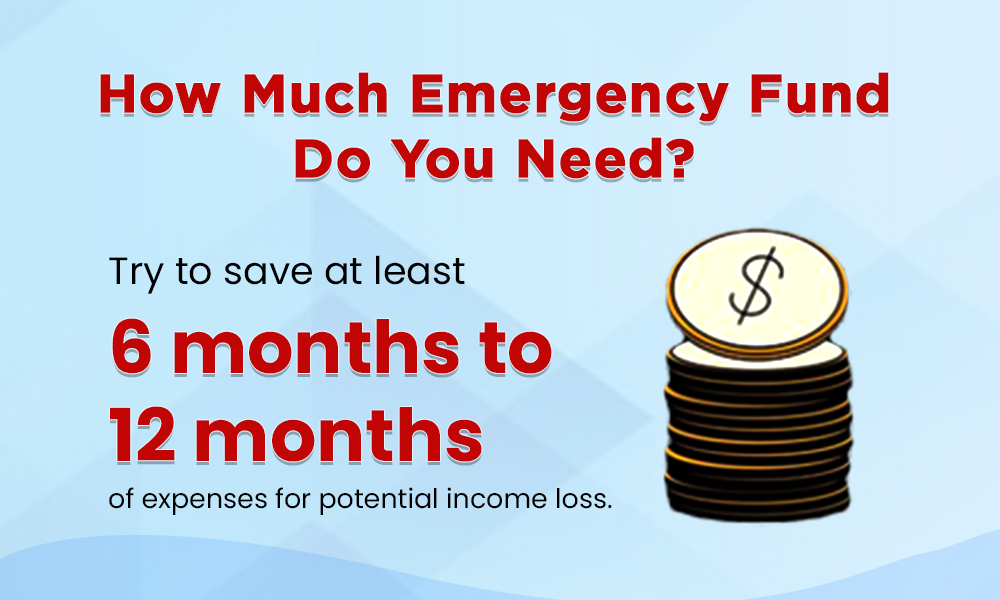
Financial planners have long preached the three-to-six-month rule: save enough to cover three to six months of essential expenses. But which end of that range applies to you? The calculator answers that question by weighing your personal circumstances.
The three-month target suits people with stable jobs, dual incomes, and high-demand skills. If you work in healthcare, government, or education, or if your partner’s income alone could cover basics, the lower end may suffice.
The six-month target fits single-income households, freelancers, commission-based workers, and those in volatile industries. If you are the sole earner for your family, work in tech or construction where layoffs are common, or have skills that take time to market, aim higher.
Some experts now recommend eight to twelve months for those with specialized, hard-to-replace roles or chronic health issues that could complicate reemployment. The calculator accommodates these variables.
What Counts as “Essential Expenses”
The biggest mistake people make is calculating based on their full lifestyle. Your emergency fund does not need to cover dining out, streaming subscriptions, gym memberships, or vacation savings. It needs to cover survival.
Essential expenses include:
- Housing: Rent or mortgage payment, property taxes, homeowners or renters insurance
- Utilities: Electricity, water, gas, internet (essential for job searching), cell phone
- Food: Groceries, not restaurant meals
- Transportation: Car payment, gas, insurance, public transit costs needed to find work
- Healthcare: Insurance premiums, medications, necessary copays
- Minimum debt payments: Credit card minimums, student loans, other obligations you cannot pause
- Basic personal care: Toiletries, clothing if necessary for interviews
Non-essential expenses you would cut immediately include entertainment, subscriptions, dining out, travel, and most shopping. Your emergency fund calculation should reflect this leaner budget.
The Calculation Formula
Here is how to build your personal emergency fund calculator.
Step 1: List your essential monthly expenses. Go through bank statements and identify everything you truly must pay to survive. Be honest but not luxurious. Add them up to get your monthly essential spending.
Step 2: Determine your risk factor. Are you in a stable job with high demand? Use 3 months. Are you a single-income freelancer? Use 6 months. Somewhere in between? Choose 4 or 5 months.
Step 3: Multiply. Monthly essentials × risk factor months = your emergency fund target.
For a single person with $3,000 in monthly essentials and moderate job stability, the target is $9,000 to $15,000. For a family with $5,000 in monthly essentials and a single income, the target jumps to $30,000.
Real-World Scenarios
Let’s run three different scenarios through the calculator.
Scenario A: The Stable Dual-Income Couple
Marcus and Elena both work in healthcare. Their combined monthly essentials total $4,500. Both have stable jobs, and either income alone could cover about 60% of essentials. They choose the conservative end of the range at 3 months.
Emergency fund target: $13,500
They save this amount in a high-yield savings account over 18 months, then shift to investing extra income while maintaining the fund.
Scenario B: The Single Freelancer
Jessica works as a graphic designer, entirely freelance. Her income fluctuates wildly. Her monthly essentials are $2,800. She has no partner, and finding new clients can take months. She chooses 8 months for safety.
Emergency fund target: $22,400
Jessica keeps this in a separate account, knowing it is her business lifeline. She adds to it during good months and draws from it during lean periods, replenishing when work picks up.
Scenario C: The Commissioned Sales Professional
David sells commercial real estate. His base salary covers only 40% of his essentials; the rest comes from commissions. When the market slows, his income disappears. His essentials are $4,200 monthly. He chooses 9 months.
Emergency fund target: $37,800
David’s fund took years to build, but when the market crashed in 2023, he survived 11 months without a sale without touching his retirement accounts or missing a mortgage payment.

Where to Keep Your Emergency Fund
The calculator tells you how much, but not where. The answer is simple: a high-yield savings account or money market account that is completely separate from your everyday checking.
Your emergency fund must be:
- Liquid: Accessible within days, not locked in investments
- Safe: Not subject to stock market fluctuations
- Separate: Out of sight so you are not tempted to spend it
- Earning something: High-yield accounts currently offer 4% to 5% APY, helping your fund keep pace with inflation
Avoid keeping your emergency fund in investment accounts. If the market drops 20% right when you lose your job, you lose money and still need cash. The emergency fund is insurance, not an investment.
The Psychological Benefit
Beyond the math, an emergency fund provides something equally valuable: peace of mind. Knowing you have six months of survival money changes how you approach your job, your relationships, and your life.
You can leave a toxic job without another lined up. You can negotiate from strength rather than desperation. You can sleep through the night instead of calculating worst-case scenarios at 3 AM.
This psychological buffer is worth more than the interest you might earn chasing slightly higher returns elsewhere.
How to Build It
Facing a $20,000 or $30,000 target can feel overwhelming. Break it into chunks.
Start with a $1,000 starter emergency fund. This covers small emergencies like car repairs or medical copays without using credit cards. Then build toward one month of essentials. Then three months. Then your full target.
Automate transfers on payday. Treat your emergency fund like a bill that must be paid. Even $50 per week adds up to $2,600 per year. Over time, the balance grows and the goal becomes reachable.
The Bottom Line
An emergency fund calculator is not just a number-crunching tool; it is a reality check. It forces you to confront what you would actually need to survive a job loss and translates that abstract fear into a concrete savings target.
The right number for you depends on your job stability, your household structure, and your personal risk tolerance. Three months may be plenty for some; nine months may be necessary for others.
Whatever the calculator tells you, the important thing is starting. Open that separate savings account. Set up that automatic transfer. Watch the balance grow. And when the unexpected happens, and it always does, you will be ready.





Leave a Reply