
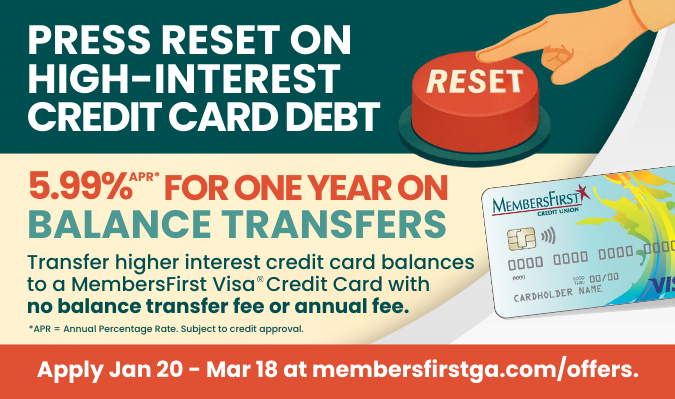
If you are carrying a balance on a high-interest credit card, you are likely all too familiar with the feeling of watching your monthly payments get eaten up by interest charges. It can feel like you are running on a treadmill, working hard but getting nowhere. A balance transfer credit card is often the perfect solution to hit the reset button. By moving your existing debt to a card with a 0% intro APR, you can stop the interest from accruing and channel every single dollar toward your principal balance.
However, as you start shopping around, you will quickly notice that most of the best offers come with a cost: a balance transfer fee. Typically, this fee ranges from 3% to 5% of the amount you transfer. On a debt of $5,000, a 5% fee adds an extra $250 to your bill right off the bat. So, the question on every savvy saver’s mind in 2026 is: Where can I find a balance transfer credit card with no fee? The answer is a bit more nuanced than a simple yes or no, but the options are out there if you know where to look.
The Landscape of Balance Transfer Fees
To understand where to find a no-fee card, it helps to understand why fees exist in the first place. When a bank offers you a 0% interest period for 18 or 21 months, they are essentially lending you money for free. The balance transfer fee is how they guarantee they make some money from the transaction, even if you pay off the entire balance before the promotional period ends.
Most of the most popular and widely advertised cards, such as the Citi Simplicity® Card or the Wells Fargo Reflect® Card, charge these fees. For instance, the Citi Simplicity® Card offers a fantastic 21-month 0% intro APR period, but it carries a fee of 3% for transfers completed within the first four months. While this fee is often worth paying considering the interest you save over nearly two years, it is not a “no-fee” product.
So, where does that leave the consumer looking for a true balance transfer credit card with no fee? You generally have to look beyond the major national banks and toward a different type of financial institution.
Your Best Bet: Credit Unions
In the current financial landscape of early 2026, credit unions have emerged as the primary source for no-fee balance transfers. Because they are member-owned, not-for-profit organizations, credit unions are often able to offer more consumer-friendly terms than their big-bank counterparts.
A prime example of this is OnPoint Community Credit Union. They have run promotions, such as their Winter Balance Transfer promotion, offering a low 1.99% APR for 12 months on balance transfers combined with a $0 balance transfer fee. This is a stellar example of a no-fee offer that allows you to save on two fronts: you avoid the upfront cost of a transfer fee and you pay minimal interest for a full year.
Similarly, Navy Federal Credit Union offers the Platinum Credit Card, which historically provides an introductory 0% APR for 12 months on balance transfers made in the first 60 days, and notably, it also features a $0 transfer fee. These offers are designed to help members consolidate debt without the penalty of an upfront cost.
The catch with credit unions is that you usually need to be a member to apply. Membership might be open to anyone who lives in a certain community, works in a specific industry, or, in the case of Navy Federal, is part of the military community. However, eligibility is often broader than people think, and it is well worth checking local credit unions in your area or large national ones to see if you qualify.
The “No-Fee” Loophole: Cards with 0% Intro Fees
While a true $0 fee is relatively rare, there is another way to achieve the same effect. Some cards offer a 0% intro APR on balance transfers and waive the transfer fee for a limited time after you open the account.
For example, the Bank of America® Customized Cash Rewards credit card offers a 0% intro APR for your first 15 billing cycles on balance transfers made within the first 60 days. Crucially, it charges a 3% balance transfer fee for those first 60 days, which is standard. However, the opportunity here is that by transferring your balance immediately, you are still paying a fee, not avoiding it entirely. The real “loophole” appears with cards that advertise a $0 intro balance transfer fee for a specific window. While less common in the mainstream market, these offers do appear periodically, effectively giving you a no-fee transfer.
Is a Fee Always a Dealbreaker?
As you search for a balance transfer credit card with no fee, it is important to keep the big picture in mind. Fixating solely on the fee could cause you to miss out on a card that saves you significantly more money in the long run.
Consider the math. If you have a $4,000 balance and you are looking at two cards:
- Card A: Offers 21 months of 0% APR but has a 5% transfer fee ($200).
- Card B: Offers 12 months of 0% APR and has a $0 transfer fee.
If you need 18 months to pay off your debt, Card A is the superior choice despite the fee. The $200 fee is worth it to gain an extra 9 months of interest-free payments. However, if you can pay off the debt in 10 months, Card B wins because you avoid the fee entirely.
Conclusion
The search for a balance transfer credit card with no fee in the USA during 2026 requires a slightly different strategy. While major issuers like Citi and Wells Fargo dominate the market with long 0% APR periods, they almost always charge a transfer fee. Your best chance at finding a true $0 fee lies with credit unions like OnPoint or Navy Federal, which occasionally offer promotions waiving these costs.
Ultimately, the best card for you depends on your specific financial situation, your credit score, and how quickly you can pay down your debt. Don’t let the perfect be the enemy of the good; sometimes, paying a small fee upfront is the key to unlocking massive savings on interest and finally achieving a debt-free life. Always read the fine print and calculate the total cost before you apply.





Leave a Reply