
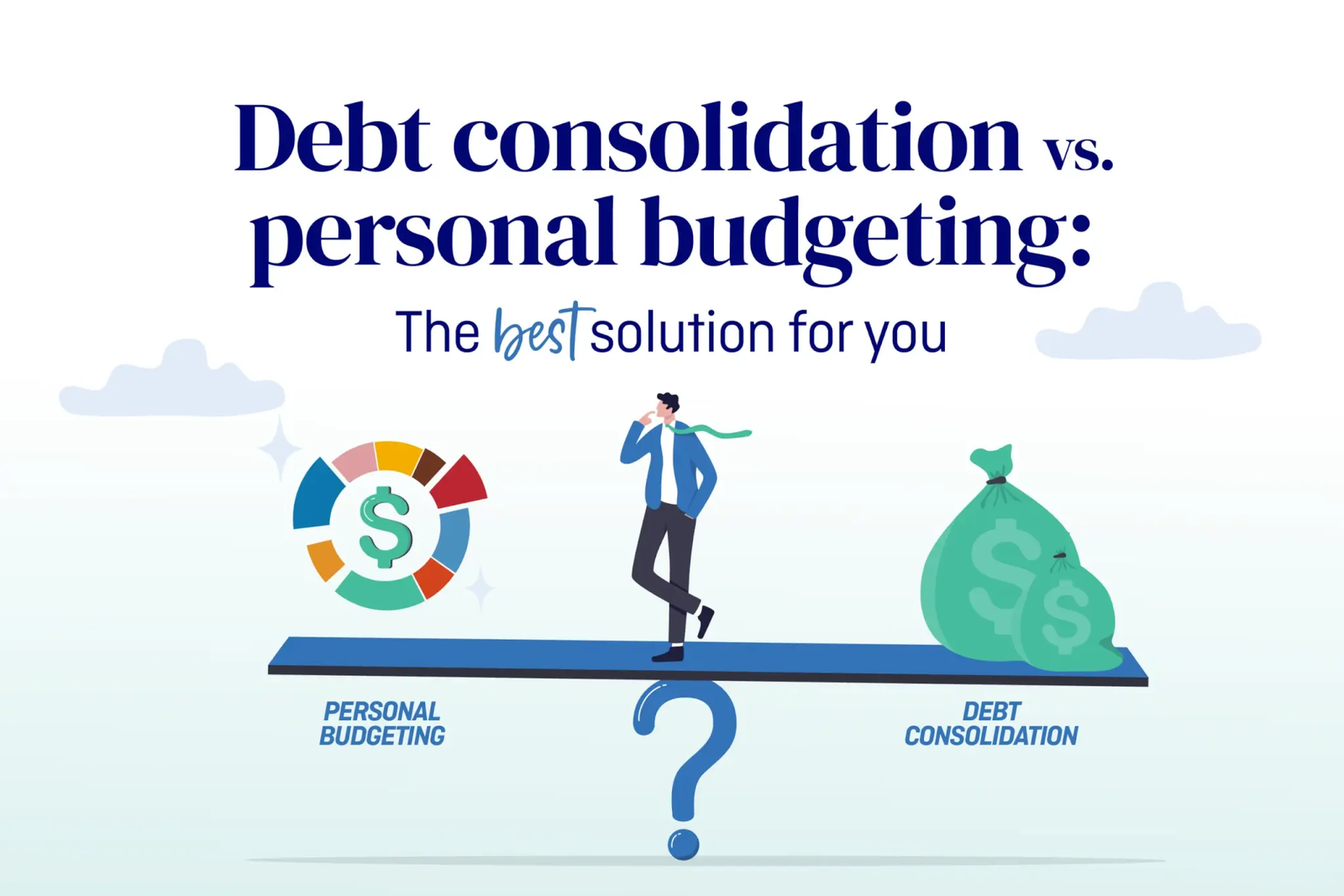
You need money. Maybe you are drowning in high-interest credit card debt and need a lifeline. Maybe your kitchen is stuck in 1985 and you finally want to remodel. Personal loans can help with both, but they serve completely different purposes. Using the wrong loan for the wrong goal can turn a smart financial move into an expensive mistake.
A personal loan is simply a fixed amount of money borrowed from a bank, credit union, or online lender, repaid in fixed monthly installments over a set term. Unlike credit cards, which let you borrow repeatedly up to a limit, personal loans provide a lump sum upfront with a clear payoff date. This structure makes them ideal for specific purposes, but the ideal loan terms differ depending on what you need.
Scenario One: Debt Consolidation
Maria is 38, a marketing manager earning $65,000 per year. Over the past few years, she has accumulated $18,000 in credit card debt across three cards. The interest rates range from 22% to 27%, and she is barely making progress despite paying $600 each month. Her credit score is 680, solidly in fair territory.
Maria’s goal is simple: escape the high-interest trap and become debt-free within a reasonable timeframe. She is considering a personal loan to pay off all three cards, leaving her with a single monthly payment at a lower interest rate.
The Math of Debt Consolidation
Maria’s current situation: $18,000 total debt, weighted average interest rate 24%, minimum payments total $450 but she pays $600. At this rate, she will be in debt for approximately 3 years and 8 months and pay over $8,500 in interest.
She researches personal loans and finds a lender offering $18,000 at 11% APR for 4 years. Her monthly payment would be $466, significantly less than her current $600. But the real magic is in the interest savings. Over the 4-year term, she will pay about $4,400 in interest, less than half of what she would pay on her credit cards.
Maria uses a personal loan calculator to compare scenarios. She realizes she can actually afford to pay more than the minimum, so she chooses a 3-year term instead. Her monthly payment rises to $589, but total interest drops to $3,200, and she is debt-free a full year sooner.
The Hidden Danger
Before Maria commits, she must confront the behavioral risk. If she consolidates her credit cards and pays them off with the loan, then immediately runs up new balances on those now-empty cards, she will end up with $18,000 in loan debt plus new credit card debt. This “debt consolidation trap” catches thousands of borrowers who treat the loan as a fresh start rather than a one-time solution.
Maria decides to cut up two of her cards and keep only one for emergencies, with a strict rule to pay it off monthly. She closes the accounts after transferring balances, removing the temptation entirely.
Scenario Two: Home Improvement
James and David own a small home in a growing neighborhood. They have lived there for seven years and love their location, but the kitchen is dated and the backyard patio is crumbling. They have $30,000 in home equity and excellent credit scores of 760.
They want to renovate, adding $25,000 in value to their home. They are considering a personal loan versus a home equity loan or HELOC.
Comparing the Options
A personal loan offers speed and simplicity. James and David can apply online, receive funds within days, and start their project immediately. There is no home appraisal, no closing costs, and no risk of foreclosure if they fall behind. The interest rate for borrowers with excellent credit might be 8% to 10% for a 5-year loan.
A home equity loan would likely offer a lower rate, perhaps 6% to 7%, because it is secured by their home. But the process takes weeks, requires an appraisal, and involves closing costs of $2,000 to $5,000. The lower rate may not offset these upfront costs, especially for a relatively small loan amount.
James runs the numbers through a loan comparison calculator. For a $25,000, 5-year personal loan at 9% APR, their monthly payment would be $519, and total interest would be about $6,140. For a home equity loan at 6.5% with $3,000 in closing costs, the effective APR jumps to nearly 9% when the costs are factored in, making the personal loan essentially equivalent.
They choose the personal loan for speed and simplicity. The renovation increases their home’s value by $30,000, well above the loan cost, and they complete the project in time for summer gatherings.
Scenario Three: The Wrong Loan for the Wrong Purpose
Now consider a cautionary tale. Marcus needs $10,000 for a vacation. He has fair credit and $5,000 in credit card debt already. He takes out a personal loan at 15% APR for 3 years, with a $347 monthly payment.
The vacation is wonderful, but Marcus returns to the same financial habits. He continues using his credit cards, and within a year, he has $5,000 in new card debt plus the $7,000 remaining on his loan. His monthly obligations now exceed $600, and he is drowning.
Marcus used a debt consolidation loan to finance consumption, a classic mistake. Personal loans for vacations, weddings, or other non-asset purchases should be approached with extreme caution. If the loan does not improve your financial position or add lasting value, it is simply trading future income for present pleasure.
Key Factors in Personal Loan Comparison
When comparing personal loans for any purpose, several factors matter more than the advertised rate.
APR versus interest rate. The APR includes fees and gives the true cost of borrowing. A loan with a lower interest rate but high origination fees may cost more than a slightly higher rate with no fees.
Loan term. Shorter terms mean higher monthly payments but dramatically lower total interest. Longer terms feel more affordable but cost significantly more over time. A 5-year loan at 10% costs far more than a 3-year loan at the same rate.
Prepayment penalties. Some lenders charge fees for paying off loans early. If you plan to accelerate repayment, avoid these loans entirely.
Origination fees. Many online lenders charge fees of 1% to 8% of the loan amount, deducted from your proceeds before you receive funds. A $10,000 loan with 5% origination fee gives you only $9,500, but you repay the full $10,000 plus interest.
Secured versus unsecured. Personal loans are typically unsecured, meaning no collateral required. Home equity loans are secured by your house, offering lower rates but putting your home at risk if you default.
Which Loan Is Right for You?
The decision between using a personal loan for debt consolidation versus home improvement comes down to purpose and math.
Debt consolidation makes sense when:
- You have high-interest credit card debt you cannot quickly pay off
- You can qualify for a rate significantly below your current average
- You have a realistic budget that allows consistent payments
- You commit to changing the habits that created the debt
Home improvement makes sense when:
- The renovation adds lasting value to your home
- You plan to stay in the home long enough to enjoy the improvements
- You have the income to support the payments
- The project addresses genuine needs rather than wants
Avoid personal loans when:
- You are consolidating debt but will keep using credit cards
- You are borrowing for consumption with no long-term value
- You cannot afford the monthly payment within your budget
- Your credit score is too low to qualify for reasonable rates
The Bottom Line
Personal loans are powerful financial tools, but like any tool, they work best when used for their intended purpose. Debt consolidation loans can free you from high-interest purgatory if accompanied by changed behavior. Home improvement loans can increase your net worth if the renovations add value.
Before signing any loan document, run the numbers through a comparison calculator. Compare multiple lenders, not just the first offer. Read the fine print about fees and prepayment penalties. And most importantly, be honest with yourself about whether the loan solves a problem or simply postpones it.
The right loan, used for the right purpose, can transform your financial life. The wrong loan can make everything worse. Choose wisely.





Leave a Reply