
You have done everything right. You pay your credit cards on time, keep your utilization low, and never apply for credit you do not need. Yet somewhere in the back of your mind, a nagging thought persists: maybe you need an installment loan to really maximize your score. Maybe that auto loan or personal loan would finally push you into the excellent credit tier.
This belief, that you must have both revolving and installment credit to achieve top scores, is one of the most persistent myths in personal finance. The truth is more nuanced. While credit mix does matter, it accounts for only 10% of your FICO score, and taking out a loan you do not need solely to improve your mix can actually backfire.
What Credit Mix Actually Means
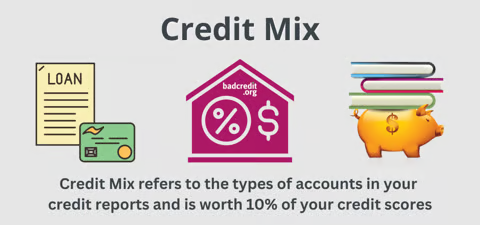
Credit mix refers to the variety of credit accounts you manage. There are two primary types: revolving credit, like credit cards where balances fluctuate and you choose how much to pay each month, and installment loans, where you borrow a fixed amount and repay it in set monthly payments over a specific term.
When lenders see both types on your report, they gain confidence that you can handle different payment structures. Someone who manages both a credit card and an auto loan successfully demonstrates broader financial capability than someone with only credit card experience.
However, this factor is far less important than most people assume. Payment history accounts for 35% of your FICO score, and credit utilization accounts for another 30%. Together, these two factors determine two-thirds of your score before credit mix even enters the calculation.
When an Installment Loan Helps
Adding an installment loan can benefit your credit profile in specific situations. The most valuable way these loans help is by establishing a positive payment history. Making regular, on-time payments over the life of the loan demonstrates reliability to lenders and adds to the most heavily weighted factor in your score.
An installment loan can also indirectly improve your credit utilization if you use it to consolidate revolving debt. Paying off credit card balances with a personal loan removes those high balances from your utilization calculation while adding an installment account. This shift can significantly boost your score because utilization carries so much weight.
For someone with a very thin credit file consisting only of a single credit card, adding an installment loan can provide a modest lift by diversifying the credit mix. But the key word is modest. The improvement from mix alone rarely transforms a fair score into an excellent one.
When an Installment Loan Backfires
The belief that installment loans always boost scores leads many consumers into costly mistakes. Taking out a loan you do not need exposes you to several risks that can far outweigh any potential credit mix benefit.
First, applying for any loan triggers a hard inquiry, which temporarily lowers your score by a few points. While this drop is minor, it is still a negative impact for a loan you did not actually need.
Second, the new loan increases your overall debt load, which affects the “amounts owed” category of your score. If the loan pushes your total debt higher without a corresponding increase in income, your score may drop rather than rise.
Most importantly, any missed payment on the loan will devastate your score. A single late payment can stay on your credit report for seven years and cause far more damage than whatever minor benefit the loan might have provided through improved credit mix.
Consumer advocates consistently warn against taking out loans solely for credit building. “You can build or maintain a solid credit score with just one type of account, such as credit cards,” advises Freddie Huynh, CEO and co-founder of Delos Financial Technologies. “Don’t feel like you must take out loans you don’t need in order to increase your credit score”.
The Real Impact: What the Numbers Show
Credit mix typically makes up about 10% of your FICO score and 10-20% of VantageScore models. To put this in perspective, someone with perfect payment history, low utilization, and a thin credit file already has 65% of their score maximized. Adding an installment loan might move the needle slightly, but it cannot compensate for problems in the more heavily weighted categories.
Consider two hypothetical borrowers. Alice has three credit cards, all with perfect payment history and utilization under 10%. Her average account age is five years. Bob has the same credit card profile but also has a two-year-old auto loan paid perfectly. Bob’s credit mix is better, but Alice’s score will still be excellent because she has mastered the factors that matter most.
Better Ways to Build Credit
If you genuinely need an installment loan, by all means use it responsibly and let it contribute positively to your credit profile. But if you are seeking credit mix improvement without actually needing to borrow, safer alternatives exist.
Focus first on mastering the two heavy hitters: payment history and credit utilization. Automate your credit card payments to ensure you never miss a due date. Keep your reported balances below 10% of your credit limits by paying before statement closing dates.
If your credit file is thin, consider becoming an authorized user on a trusted family member’s well-managed credit card. This adds positive history to your report without requiring you to take on new debt.
Secured credit cards and credit-builder loans from institutions like Self provide structured paths to building credit with lower risk than traditional installment loans. These products are designed specifically for credit building and often come with guardrails that protect you from common pitfalls.
The Bottom Line
The credit mix myth persists because it contains a kernel of truth: having both revolving and installment accounts can help your score. But the idea that you need an installment loan to achieve excellent credit is simply wrong.
You can build a credit score in the 800s using nothing but credit cards responsibly managed over time. The most important factors will always be paying on time and keeping balances low. Credit mix is the finishing touch, not the foundation.
If you need a loan for a legitimate purpose, treat it as an opportunity to demonstrate responsible borrowing. But never take on debt you do not need just to chase a minor scoring factor. The risks of missed payments, increased debt load, and unnecessary interest charges far outweigh any potential benefit to your credit mix.
Your credit score rewards smart financial decisions, not artificial complexity. Focus on the fundamentals, and the mix will take care of itself when the time is right.





Leave a Reply