
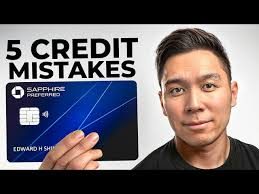
Getting your first credit card feels like receiving a key to the adult world. That small piece of plastic represents trust, independence, and the ability to buy things without counting cash. But that same card can become a financial weapon aimed at your own future if you do not understand how easily mistakes compound into lasting damage.
The difference between a credit card that builds wealth and one that destroys your financial life comes down to avoiding specific errors. I have watched friends with similar incomes and backgrounds end up in completely different financial places simply because of how they handled their first credit card. The ones who made these five mistakes spent years recovering. The ones who avoided them built lives with better options and fewer regrets.
Mistake One: Paying Late or Missing Payments Entirely
The most destructive mistake you can make with your first credit card is also the easiest to commit accidentally. One forgotten due date, one automated payment that fails because you forgot to fund the account, one assumption that “I will pay it tomorrow” turns into a thirty-day late payment that haunts you for years.
Payment history accounts for thirty-five percent of your FICO score, more than any other single factor. A single late payment can drop your score by fifty to one hundred points depending on where you started. For someone with a thin credit file, the damage can be even more severe because you have no established history to cushion the blow.
What makes this mistake particularly insidious is how long it lingers. A late payment stays on your credit report for seven full years from the date it was reported. Seven years of lenders seeing that you once failed to pay on time. Seven years of higher interest rates and more difficult approvals.
The fix requires building systems rather than relying on memory. Set up automatic payments for at least the minimum amount due on every credit card you own. Link the payment to a bank account you maintain regularly and check monthly to ensure funds are available. If automatic payments make you nervous, set calendar reminders with alerts that start a week before each due date.
If you do miss a payment, call your issuer immediately. Many credit card companies have policies that forgive first-time late payments if you have otherwise been a good customer. Asking for a courtesy waiver sometimes results in the late payment never being reported to the credit bureaus at all. But you must act before thirty days pass, because that is when the damage becomes permanent.
Mistake Two: Maxing Out Your Card or Carrying High Balances
Your first credit card likely arrives with a modest limit, perhaps five hundred dollars or one thousand dollars. That small limit creates a dangerous illusion that spending a few hundred dollars is harmless. In reality, every dollar you charge affects your credit utilization ratio, the second most important factor in your credit score.
Credit utilization measures how much of your available credit you use at any given time. If your limit is one thousand dollars and you carry a balance of eight hundred dollars, your utilization is eighty percent. Scoring models view this as a sign of financial distress, and your score drops accordingly.
The impact is linear rather than threshold-based. A borrower using twenty-five percent of their limit is viewed as higher risk than someone using just five percent. If you hover near your limit month after month, your score will never reach its potential even if you pay on time every single time.
Beyond the scoring impact, high balances create a debt spiral that proves difficult to escape. Credit card interest rates for first-time cardholders often range from eighteen to twenty-eight percent. A five hundred dollar balance at twenty-five percent interest costs over one hundred dollars in interest annually if you only make minimum payments. That is money that could be building savings instead of enriching a bank.
The strategy that works requires treating your credit card like a debit card with extra steps. Only charge what you can pay off immediately. If you do not have cash in your bank account to cover a purchase, do not put it on credit. Let your balance hit zero every single month when the statement arrives.
If you want to optimize your score further, learn your statement closing date and pay your balance down to under ten percent of your limit a few days before that date. This ensures the balance reported to credit bureaus stays low while you still get the convenience of using the card throughout the month.

Mistake Three: Applying for Too Many Cards at Once
The thrill of approval can become addictive. Your first card arrives, you use it responsibly for a few months, and suddenly every store you visit offers ten percent off if you open a card today. The offers feel like compliments, validation that you have arrived as a creditworthy adult.
Each application triggers a hard inquiry on your credit report, which typically lowers your score by three to seven points. One or two inquiries cause minimal damage, but applying for five cards within a few months signals desperation to scoring models. People with six or more hard inquiries are statistically up to eight times more likely to file for bankruptcy than those with none.
Each new card also lowers your average account age, another factor in your credit score. If your first card is three months old and you open a new card today, your average account age drops to one and a half months. That young profile makes lenders nervous.
The better approach requires patience and strategy. Use your first card consistently for at least six months before considering any additional applications. During those months, build a track record of on-time payments and low utilization. When you do apply for a second card, research options that match your spending patterns and offer rewards you will actually use.
When you finally apply, use pre-approval tools that check your odds without triggering hard inquiries. Many issuers offer these tools on their websites. If you are not pre-approved, wait another few months before trying again.
Mistake Four: Closing Your First Card Later
Years after getting your first card, you will likely qualify for better options with higher limits and more generous rewards. The natural instinct is to close that starter card, the one with the low limit and no perks, because it feels like a relic of your financial past.
Closing your first card removes its entire credit history from your active accounts and reduces your total available credit. Your average account age drops immediately because that oldest account no longer factors into the calculation. Your credit utilization increases because you lose that card’s credit limit from your available credit pool.
Consider this example. You have three cards with limits totaling fifteen thousand dollars and balances totaling two thousand dollars, giving you thirteen percent utilization. Your first card has a five thousand dollar limit and a zero balance. If you close that first card, your available credit drops to ten thousand dollars while your balances remain two thousand dollars. Your utilization jumps to twenty percent, potentially lowering your score.
The fix requires fighting the urge to close accounts that cost you nothing. If your first card has no annual fee, keep it open forever. Use it occasionally for small purchases to prevent the issuer from closing it due to inactivity. Let it age and contribute to your history indefinitely.
If your first card does charge an annual fee, consider requesting a product change to a no-fee version of the same card rather than closing it outright. Most issuers allow this switch without affecting your credit history. You keep the account open and the history intact while eliminating the fee.
Mistake Five: Ignoring Your Statements and Monitoring
Your credit card statement arrives each month, and it is tempting to glance at the minimum payment amount and delete the email. That habit leads directly to the other four mistakes on this list.
Ignoring your statements means you might miss fraudulent charges. Identity thieves test stolen card numbers with small purchases, hoping you will not notice. If you do not review transactions, those test charges can grow into larger ones, and you may be held responsible for some of them depending on how quickly you report them.
Ignoring your statements also means you might miss changes to your interest rate, fee structures, or terms and conditions. Card issuers can change terms with notice, and buried in those notices could be changes that cost you money.
Monitoring your credit score regularly alerts you to problems before they spiral. Free services like Credit Karma, CreditWise, and your card issuer’s app provide regular score updates and alerts about changes to your credit report. If your score drops suddenly, you can investigate immediately rather than discovering the damage months later when applying for a loan.
The habit that protects you takes five minutes each month. When your statement arrives, review every transaction. Confirm that you recognize each charge. Check that your payment was processed correctly. Note your statement closing date for the next month. This simple routine catches problems early and keeps you connected to your financial life.
The Path Forward
Getting your first credit card marks the beginning of your financial independence, not the end of it. The mistakes you avoid matter more than the rewards you earn. Pay on time, every time. Keep your balances low. Apply for new cards slowly. Keep old accounts open. Monitor everything closely.
These five habits will serve you for decades. They protect your credit score from the slow erosion that small mistakes cause. They ensure that when you need credit for a home, a car, or an unexpected emergency, your score reflects your responsibility rather than your errors.
Your first credit card is a tool, not a test. Use it wisely, and it will open doors throughout your life. Use it carelessly, and those doors will remain closed until you spend years undoing the damage. The choice is yours, starting with your very next payment.




Leave a Reply